

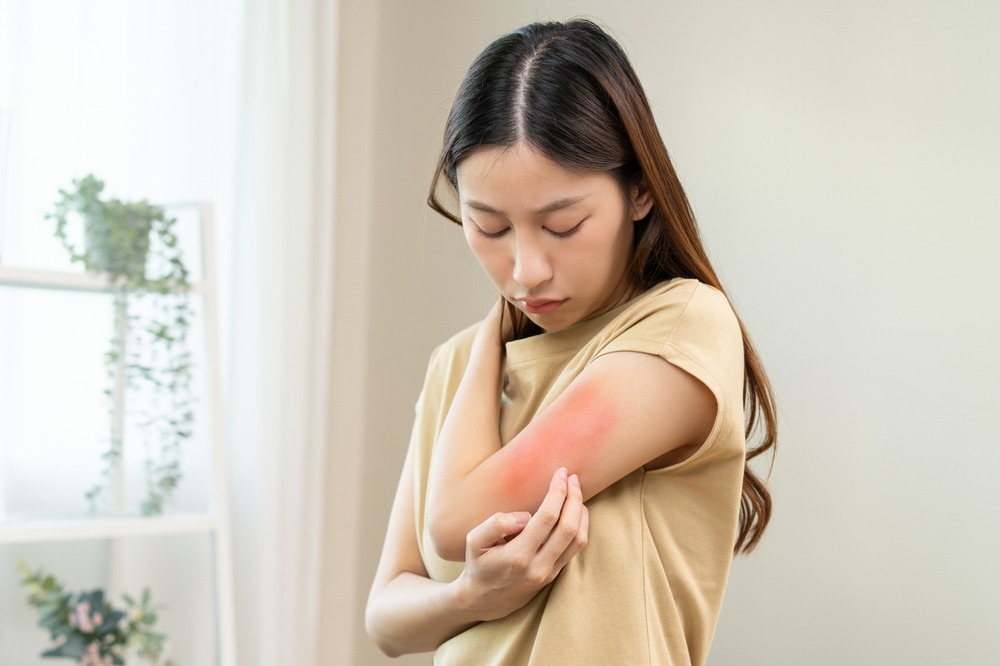
Two of the most common skin conditions, psoriasis and eczema, often look remarkably similar to the untrained eye. They both cause redness, scale, and inflammation, yet they require very different management strategies. Misidentifying your condition can lead to ineffective treatments and prolonged discomfort.
Distinct biological mechanisms drive each condition, and they present specific clues if you know where to look. By understanding the subtle differences in appearance, sensation, and location, and consulting specialists like the team at Elite Dermatology & Esthetics, you can better advocate for your skin health.
The Fundamental Biological Differences
To tell these conditions apart, you must first understand what is happening beneath the surface of your skin. Psoriasis is an autoinflammatory disease where your immune system becomes overactive. Skin cells regenerate faster than normal.
In healthy skin, skin cells grow and shed over a month. In someone with psoriasis, this process speeds up to just three or four days. The dead cells pile up on the surface, creating thick, raised plaques.
Eczema, specifically atopic dermatitis, operates differently. It is primarily a defect in the skin barrier combined with a hypersensitive immune system. Your skin struggles to retain moisture and keep out bacteria or irritants. Specialists at Elite Dermatology & Esthetics often explain eczema as a “leaky roof.” Because the barrier is compromised, external triggers cause inflammation. This reaction leads to the intense itching and redness associated with the condition.
Key Takeaways
- Psoriasis is an autoinflammatory condition causing rapid cell growth.
- Eczema is a barrier defect that lets moisture out and irritants in.
- Elite Dermatology & Esthetics specializes in diagnosing these underlying mechanisms to create targeted treatment plans.
Analyzing the Visual Differences
While both conditions cause red patches, the specific characteristics of the rash provide major clues. You need to look closely at the texture, the borders, and the surface of the affected area.
Pro Tip: Check your nails. Psoriasis often causes pitting or separation of the nail from the bedElite Dermatology & Esthetics offers specialized facial psoriasis treatments in Arlington to manage these sensitive areas without damaging delicate skin.
The Sensation: Itch vs. Burn
How the rash feels is just as important as how it looks. Patients describe the physical sensation of these conditions in distinctly different ways. Paying attention to these signals can help you identify the problem.
Eczema is famous for causing an intense, unbearable itch. Many doctors describe it as “the itch that rashes,” meaning the scratching often precedes the visible rash. The itch can be severe enough to disrupt sleep and cause bleeding from scratching.
Psoriasis can itch, but oftentimes it presents without itch.
Variations That Complicate Diagnosis
Most people have the standard forms of these diseases, but variations exist. Understanding these subtypes can prevent confusion if your symptoms do not match the classic descriptions. You might have a less common form that requires a specialist’s eye, such as the dermatologists in McLean at Elite Dermatology & Esthetics.
Guttate Psoriasis vs. Nummular Eczema
Guttate psoriasis appears as small, coin-shaped spots.. These can look very similar to nummular eczema, which creates coin-shaped patches on the skin. The difference often lies in the scaling and morphology of individual lesions.
Inverse Psoriasis vs. Intertrigo
Inverse psoriasis shows up in skin folds like the armpits or groin. Unlike plaque psoriasis, it is smooth and red, not scaly, because of the moisture in these areas. This can be easily confused with fungal infections or heat rash, making accurate diagnosis vital.
Dyshidrotic Eczema vs. Pustular Psoriasis
Dyshidrotic eczema causes tiny, intensely itchy blisters on the hands and feet. Pustular psoriasis also affects the hands and feet but creates white, pus-filled blisters. While they look similar, pustular psoriasis is often painful rather than itchy and may cause fever.
Treatment Implications
Knowing the difference matters because the treatments diverge significantly for moderate to severe cases. For mild cases, doctors often prescribe topical corticosteroids and moisturizers for both conditions to reduce inflammation. However, the similarities largely end there.
- Psoriasis is often treated systemically. Elite Dermatology & Esthetics provides cutting-edge biologic therapies that target specific parts of the immune system to stop rapid cell growth.
- Eczema management focuses heavily on barrier repair. Treatment involves identifying allergens and using gentle skincare. Elite Dermatology & Esthetics helps patients develop comprehensive skincare routines to repair the barrier and may prescribe antibiotics if the eczema becomes infected from scratching.
When to See a Professional
You should consult a dermatologist in Alexandria if your rash does not improve with over-the-counter hydrocortisone or moisturizers. Persistent itching that interferes with your daily life warrants a professional opinion.
If the visual examination is inconclusive, the experts at Elite Dermatology & Esthetics can perform a skin biopsy. This involves taking a tiny sample of skin to examine under a microscope, providing a definitive answer by revealing the cellular structure of the rash. While rarely needed, it eliminates the guesswork for stubborn cases.
Final Thoughts on Skin Health
Living with a chronic skin condition is challenging physically and emotionally. Distinguishing between psoriasis and eczema is the first step toward reclaiming comfort in your own skin. While they share symptoms, their underlying causes demand different approaches. You do NOT need to suffer with your skin conditions. Excellent treatments providing long term control are readily available.
Pay attention to the clues your body gives you. Note the location, the feeling, and the look of the rash. Contact Elite Dermatology & Esthetics to find a solution that works.