

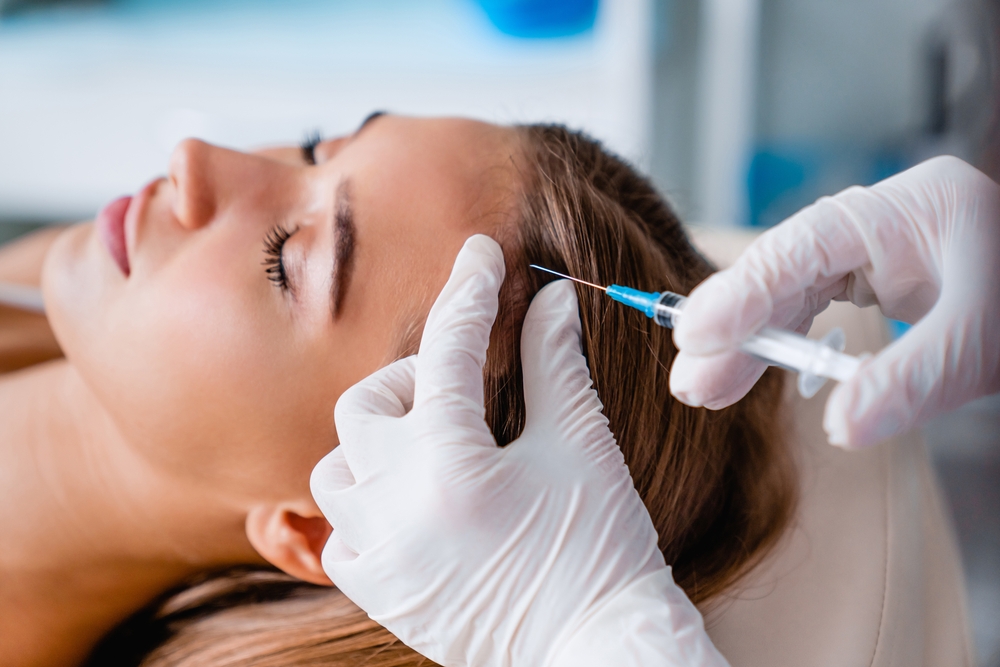
Platelet-Rich Fibrin (PRF) injections produce measurably better hair counts when layered onto a medical regimen rather than used alone. Because androgenetic alopecia is progressive and hormonally driven, a single intervention rarely holds ground long-term. A lasting approach treats the follicle simultaneously from three angles: biologic signaling, vascular support, and hormonal suppression with guidance from a dermatologist in McLean, VA.
What PRF Delivers to the Hair Follicle
PRF is a platelet concentrate drawn from autologous blood and spun at low centrifugal speed without anticoagulants. This preserves leukocytes, stem cells, and a three-dimensional fibrin mesh that slowly releases growth factors (PDGF, VEGF, TGF-β) across 7 to 10 days—a significant evolution over older PRP preparations that release growth factors in a rapid 24-hour bolus.
Sustained growth factor exposure delivers key follicular benefits:
- Extended Anagen Phase: Hairs remain in active growth longer before shedding.
- Vascular Support: Micro-capillaries form around the bulb to improve oxygenation and nutrient delivery.
- Increased Shaft Caliber: Existing miniaturized hair shafts thicken over time.
- Reduced Scalp Inflammation: Calms inflammatory signaling in patients with coexisting scalp conditions.
Induction consists of 3 sessions spaced 4 to 6 weeks apart, followed by maintenance every 6 to 12 months. Reduced shedding appears around weeks 6 to 10, with visible density improvements near month 4.
Why PRF Requires a Multimodal Approach
While PRF hair loss treatments stimulate viable follicles, they do not block dihydrotestosterone (DHT)—the androgen driving progressive miniaturization. Combining therapies addresses multiple pathways simultaneously and allows for lower, better-tolerated medication doses.
1. Vascular & Follicular Stimulation (Minoxidil)
- Topical Minoxidil (5%): Shortens the resting (telogen) phase. Initial shedding between weeks 2 and 8 signals synchronized follicles entering new growth.
- Low-Dose Oral Minoxidil: Prescribed off-label (0.625–5 mg daily) for patients not responding to topical minoxidil or topical sensitivity under the supervision of a dermatologist in Tysons, VA.
2. Hormonal Suppression
- Men (Finasteride & Dutasteride): Oral finasteride (1 mg daily) or topical formulations reduce scalp DHT concentrations, slowing miniaturization at its root.
- Women (Spironolactone): Serves as an androgen receptor antagonist (50–200 mg daily), frequently paired with topical minoxidil.
3. Adjunctive Support
- Ketoconazole 2% Shampoo: Provides mild local anti-androgenic activity when used 2 to 3 times weekly.
- Nutritional Support: Correcting iron (ferritin < 40–70 ng/mL) or vitamin D deficiencies supports healthy hair cycles.
4. 12-Month Treatment Sequencing
- Weeks 0–4: Diagnostic evaluation (trichoscopy, pull test, blood panel) and initiation of medical therapy.
- Weeks 4–20: 3 to 4 PRF injection sessions spaced 4 to 6 weeks apart with baseline photography.
- Month 6: Reassessment comparing global photographs and trichoscopic evaluation.
- Months 6–12: Regimen adjustments and scheduling the first maintenance PRF session.
Take the First Step Toward Fuller Hair
For further clinical insights on hair loss and skin health, feel free to explore our Dermatology News archive. Finding the right solution for hair thinning starts with a personalized evaluation, contact Elite Dermatology & Esthetics today to schedule your consultation and build a treatment plan tailored to your goals.