

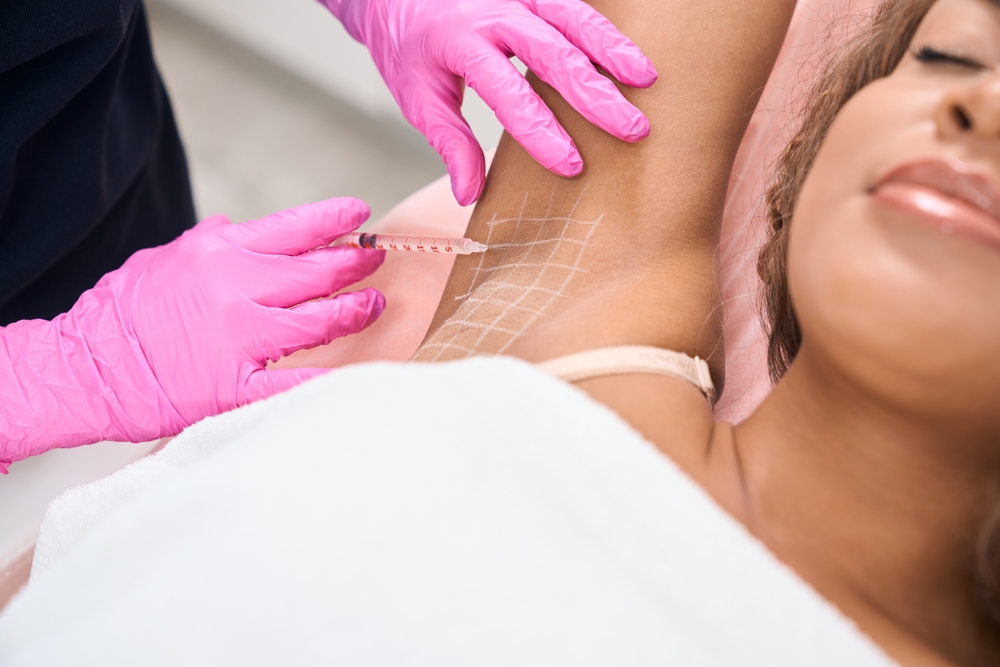
Many people live with hyperhidrosis, a medical condition where the body produces sweat far beyond what thermoregulation requires. While clinical-strength antiperspirants help a portion of patients, others require prescription therapy, in-office procedures, or neuromodulator injections. A board-certified dermatologist providing specialized Botox in Arlington, VA can distinguish ordinary perspiration from a diagnosable disorder and match severity to the right intervention.
Neuromodulator injections received FDA approval for severe primary axillary hyperhidrosis in 2004. Understanding how injections interrupt sweat signaling explains why they succeed where drugstore products fail.
What Separates Hyperhidrosis From Normal Sweating
Sweating becomes a clinical concern when it occurs without heat, exertion, or emotional triggers, disrupting work, handwriting, handshakes, or clothing choices. Primary Focal vs. Secondary Hyperhidrosis
Primary focal hyperhidrosis concentrates in specific sites: underarms, palms, soles, face, and scalp. The sweat glands are structurally normal, but sympathetic nerves fire excessively. Conversely, widespread sweating that begins in adulthood or wakes patients at night stems from underlying conditions (thyroid disorders, diabetes, menopause) or medications, requiring bloodwork before proceeding with treatment.
Why Antiperspirants Stop Working
OTC antiperspirants rely on aluminum salts to form temporary plugs inside sweat ducts. In hyperactive glands, these plugs wash out within hours, and higher concentrations can cause stinging and eczematous irritation. Prescription aluminum chloride at 20% is the next step, applied at bedtime. The American Academy of Dermatology treats topical failure as a signal to shift from duct-blocking topicals to therapies acting on nerve signals.
How Botox Interrupts Sweat Signals
Eccrine sweat glands are controlled by sympathetic nerve fibers releasing acetylcholine. Onabotulinumtoxina blocks this neurotransmitter at the nerve ending, so the gland receives no signal to produce sweat.
Clinical studies on targeted Botox injections show an 80% to 90% reduction in sweat production within four weeks, with most patients maintaining improvement for six months or longer. Because the treatment acts strictly on local nerve signaling rather than gland structure, compensatory sweating elsewhere on the body is rare compared to surgical interventions.
What the Appointment Involves & Alternative Options
- Underarm Appointments: Involve standard axillary dosing across 10 to 20 superficial injection points. Sessions take 20 minutes with minimal discomfort and no downtime aside from avoiding heavy heat/exercise for 24 hours.
- Topical & Oral Therapies: Options include prescription anticholinergic wipes (glycopyrronium tosylate 2.4%) applied daily or oral anticholinergics (glycopyrrolate) for multi-site sweating.
- Energy-Based & Device Therapies: Iontophoresis delivers low-voltage tap water currents for hands/feet, while microwave thermolysis permanently reduces underarm sweat glands over 1 to 2 sessions.
Take the First Step Toward Long-Lasting Relief
Finding the right solution for hyperhidrosis starts with a personalized evaluation. Contact Elite Dermatology & Esthetics today to get started.